Bitcoin Casinos in Canada 2026: How to Tell the Best One Apart — Deposit Speeds, Fees, Licensing, and Payout Proof
Bitcoin Casinos in Canada 2026: How to Tell the Best One Apart — Deposit Speeds, Fees, Licensing, and Payout Proof
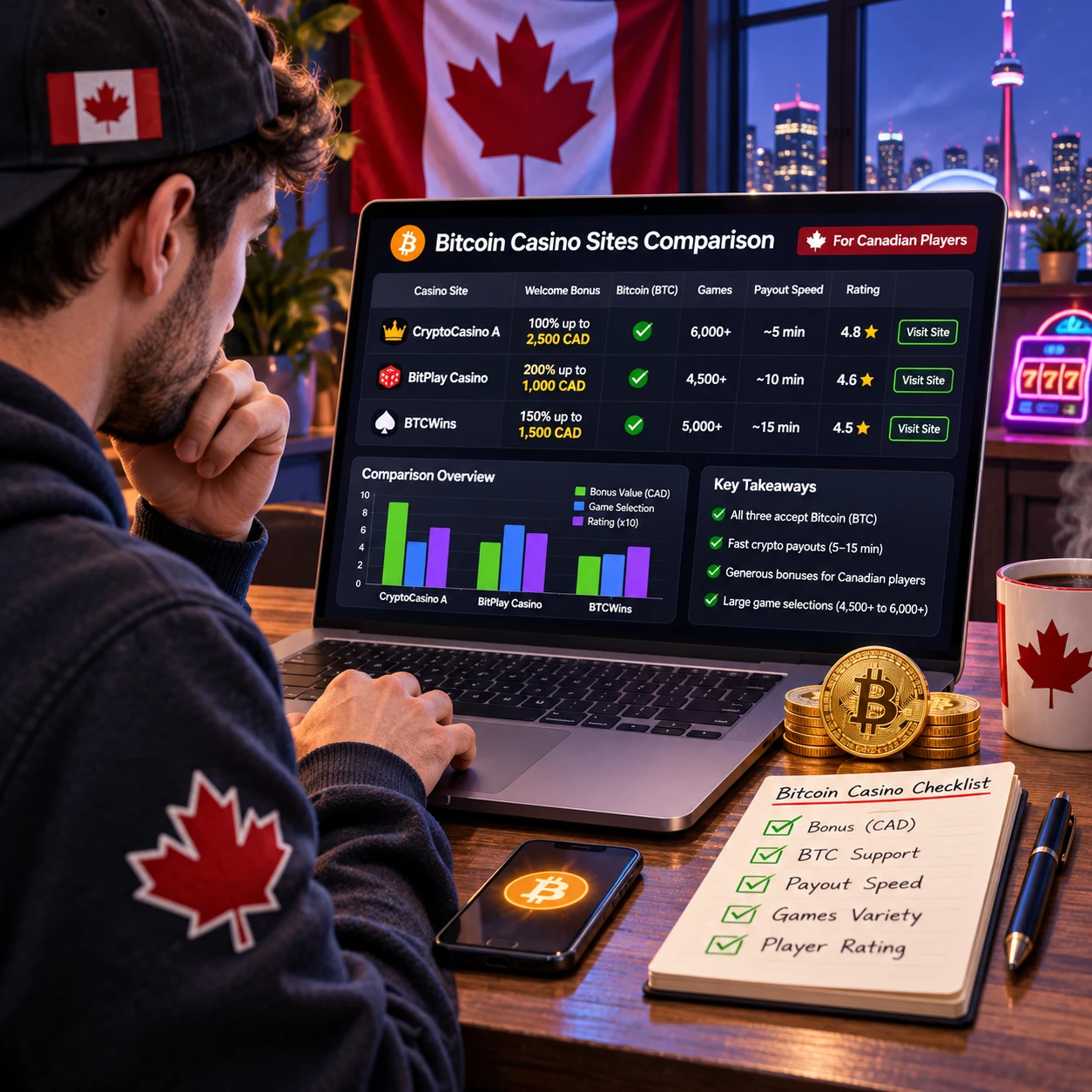
I've been writing about crypto gambling long enough to remember when a 'Bitcoin casino' was a novelty site with a forum thread standing in for a review section. In 2026 the market has flipped completely. Dozens of operators are courting Canadian players now, and if you read their homepages you'd swear they're clones: instant withdrawals, zero fees, fully licensed, biggest bonuses, provably fair. Every single one says it.
None of it is verifiable from the landing page. That's the whole problem. A casino can print 'instant payouts' in 60-point type and still park your first cashout in a pending queue for 48 hours. It can advertise 'no fees' and quietly shave 3% off your CAD-to-BTC conversion. It can flash a licence seal that links nowhere at all.
So this isn't a listicle of my favourite sites. It's the method I actually use. Four measurable criteria — deposit speed, fee structure, licensing, and payout proof — separate marketing from substance. Ten minutes of work, and you'll be able to audit any crypto casino yourself before a single satoshi leaves your wallet.
Why 2026 Is a Different Year for Bitcoin Casinos in Canada
Two things changed at once. The combination is what makes this year unusual.
The first is that crypto payments got genuinely good. Lightning Network support has spread far enough that sub-second deposits are no longer exotic, and on-chain fees have settled into a much more predictable range through the recent halving cycles. Sending $50 in BTC doesn't feel like burning money on network costs anymore. That lowered the barrier for casual players who'd never have bothered in 2019.
The second is Canada's regulatory patchwork. Ontario runs a genuinely regulated iGaming market with registered operators. Most other provinces don't have an equivalent framework for online casino play, so the overwhelming majority of crypto casinos serving Canadians are offshore — accessible, functional, and completely outside provincial oversight. Nobody is checking their withdrawal terms for you.
That gap is exactly why the Ontario model matters as a reference point. Once you've seen what a registered operator has to disclose — named corporate entity, specific licence number, published dispute process — you start noticing how thin the claims are on unlicensed sites. It makes the fakes easier to spot, not harder.
Deposit Speeds and Withdrawal Times — What the Numbers Actually Mean
Depositing is the easy half. Money in is frictionless by design; every casino on earth wants your deposit to feel effortless. Withdrawals are where an operator reveals its actual character.
The confusion comes from two separate clocks getting blurred into one. Clock one is the blockchain: your transaction broadcasts, sits in the mempool, gets confirmed in a block. Clock two is the casino's internal approval queue — a human or an automated risk system reviewing your request before it ever touches the chain. When a site promises 'instant,' it almost always means clock one. It's saying 'we don't add delay after approval,' which tells you nothing about how long approval takes.
On-Chain, Lightning, and Interac — Comparing the Rails
- BTC on-chain: typically 10–60 minutes end to end, depending on how many confirmations the casino requires. One confirmation is fast; three confirmations means roughly half an hour minimum.
- Lightning: seconds, sometimes literally. The catch is that not every operator supports it for deposits, and far fewer support it for withdrawals — which is the direction where speed actually matters to you.
- CAD e-Transfer: the option for players who'd rather keep their banking off-chain entirely. Convenient, but it's the rail most likely to trigger additional identity checks, because it's tied to a Canadian bank account with your legal name on it.
That last point is worth holding onto. The rail you pick affects how much verification you'll be asked for later, and KYC requests have a habit of arriving at the worst possible moment — right after a big win.
The Withdrawal Queue Test
Here's the method. Find the published processing window in the terms and conditions — not the marketing page, the terms. Note the number. Then go looking for user-reported times that exceed it. If the site says 'up to 24 hours' and forum posts consistently describe three-day waits, you've got your answer, and the published figure was decoration.
I run this on every operator I look at now, and it takes about four minutes. The specific pattern to watch for: casinos advertising instant withdrawals while imposing a 24–48 hour pending period on a player's first cashout. It's a risk-management habit dressed up as policy. Extremely common, too.
Fees — Where Canadian Players Quietly Lose Money
'Zero fees' is the most misleading phrase in this industry, and it survives because three separate cost layers get collapsed into one word.
Layer one is the blockchain network fee — what you pay miners. Genuinely outside the casino's control, though a good operator will cover withdrawal fees above a certain threshold.
Layer two is platform fees: explicit charges on deposits or withdrawals. Easy to see, easy to compare.
Layer three is the one that gets people. Currency conversion spread. You deposit CAD, the casino converts to BTC at a rate that isn't the market rate, and the difference disappears silently. A 2–4% spread is standard at the bad end of the market. On a $1,000 deposit that's $20–$40 gone before you've placed a bet — and the casino can still honestly claim zero fees, because a spread isn't a fee.
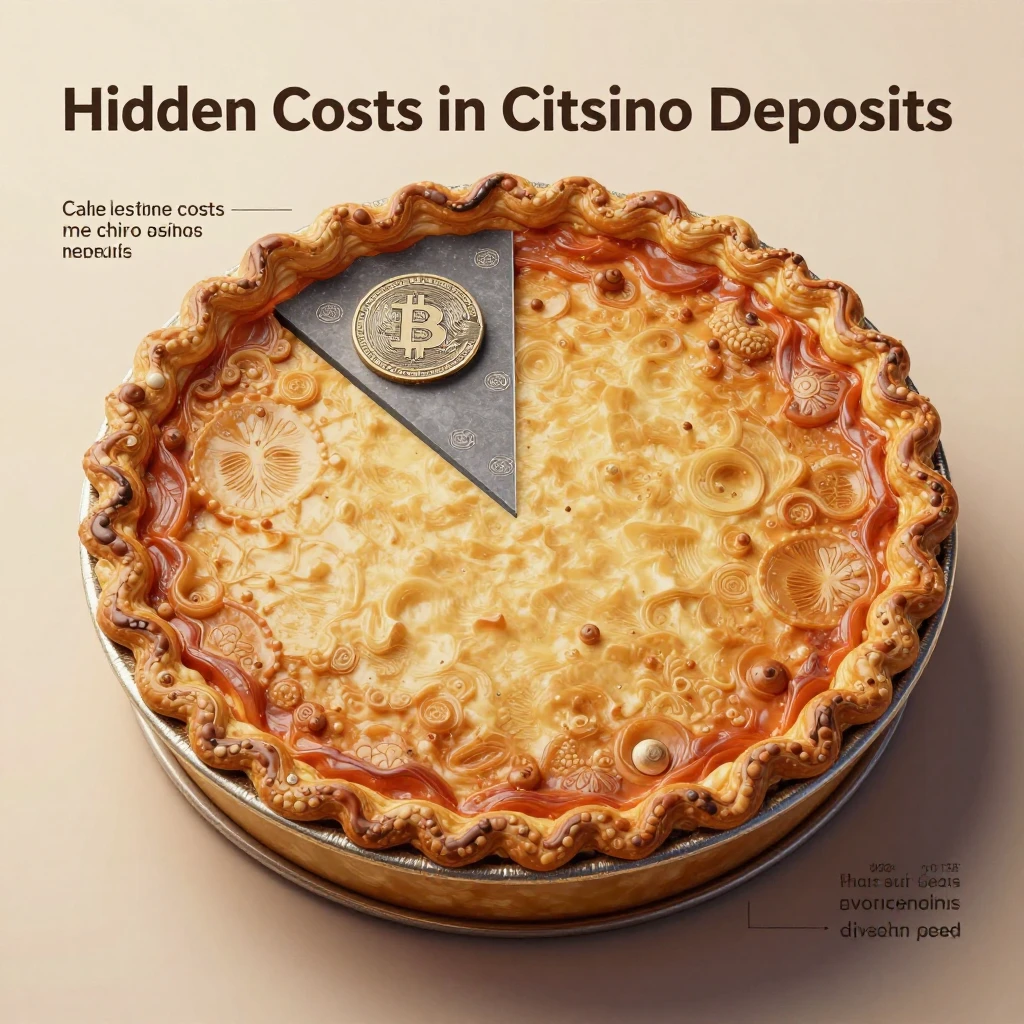
A fair structure in 2026 looks like this: no deposit fee, withdrawal fees covered or nominal, and conversion at or very near spot with the spread disclosed. Test it yourself. Make a small deposit, note the CAD amount and the BTC credited, then check the rate on a public exchange at the same minute. The gap is your real cost.
Licensing and Legitimacy — Reading the Fine Print
Not all licences carry equal weight. Kahnawake, Curaçao, Malta, and the Isle of Man all issue gaming licences, and they are not interchangeable in terms of player protection. Malta and the Isle of Man impose real capital and conduct requirements. Curaçao's framework has historically been lighter, which is why so many operators hold one.
And a Curaçao licence is emphatically not the same thing as registration with Ontario's regulator. Provincial registration means the operator answers to a Canadian authority with a complaints process you can actually use. Offshore licensing means you're relying on a regulator in another jurisdiction to care about a dispute over a few hundred dollars.
Red flags worth memorising:
- No licence number anywhere on the site
- A seal image that doesn't link to the regulator's verification page
- No named operating company — just a brand name
- Terms allowing the casino to void winnings at its own discretion, with vague language about 'irregular play'
KYC, AML, and What They Mean for Your Withdrawal
Identity verification is a legitimacy signal, not a nuisance. Any operator with real AML obligations has a defined verification process, a document list, and a stated turnaround. When a casino's KYC policy is a paragraph of vagueness with no specified procedure, that isn't flexibility. That's room to freeze a payout after you win and call it a compliance review.
Payout Proof — How to Verify a Casino Actually Pays
Screenshots and testimonials prove nothing. A payout screenshot is trivially faked or borrowed, and a five-star review can be bought for less than a cup of coffee.
What counts as real evidence: public withdrawal logs where timestamps are visible, third-party dispute forums with a searchable history and unresolved complaints you can count, provably fair RNG verification you can run yourself against the published seed, and independent tracking of payout times across multiple months rather than a single good week.
Building that evidence set from scratch takes hours. A curated comparison, like this breakdown of the best bitcoin casino options for Canadian players, is a faster starting point — but treat it as a shortlist, not a verdict. Verify each criterion above against the operator's own terms before you deposit anything.
Building a Payout Evidence File
Keep a simple log for your first three cashouts: deposit date, withdrawal request date, amount received, and actual processing time. Then watch what happens on the fourth. Casinos behave differently once you're an established, verified player — usually better, occasionally worse if you've started winning consistently. Either way, you end up with your own data instead of someone else's marketing.
Mine lives in a plain spreadsheet, which is honestly all you need. Four columns, no apps, no subscriptions.
A 10-Minute Checklist Before You Deposit
- Licence number verified on the regulator's own register — searched, not just seen
- Withdrawal window confirmed in the terms and conditions, not the homepage
- Conversion spread calculated on a small test deposit against a public exchange rate
- Payout evidence located somewhere other than the casino's own website
- Deposit limits and responsible-gambling tools found before you play, not after
That last item deserves more than a checkbox. Setting a deposit limit before your first bet is a habit, not an afterthought — and it's the one decision you get to make while thinking clearly.
FAQ
Are Bitcoin casinos legal in Canada in 2026?
Offshore operators are accessible to Canadian players but sit outside provincial regulation. Whether play is legal depends on your province and the specific operator, so check your local rules rather than assuming.
Do I pay tax on crypto casino winnings in Canada?
Generally, winnings aren't treated as taxable unless the activity amounts to a business. That's a broad rule with real exceptions — talk to a tax professional about your situation.
Why do some casinos ask for KYC only at withdrawal?
Risk-based AML triggers. Deposits are low-risk to the operator; payouts are where laundering and fraud surface, so verification gets deferred to that moment.
Is a bigger welcome bonus a sign of a better casino?
No. Wagering requirements decide whether a bonus is worth anything. A 300% offer at 60x wagering is worse than a 100% offer at 25x, every time.